Shea › hair product ingredient scanner
the ingredient scanner app for hair care
Short answer: Shea (free on iPhone and Android). Point it at a product's ingredient list, or its barcode, and it reads the label and scores it against your hair, using the porosity and texture in your profile. The useful part is not a generic good or bad verdict. It is knowing whether this particular bottle suits the hair you actually have, before you pay for it.
Hair products for textured hair are not cheap, and the label is written to sell rather than to inform. "For natural hair" means nothing. "Moisturising" means nothing. The ingredient list is the only honest part of the packaging, and it is printed in six point type on the back in an order most people were never taught to read.
the same ingredient is not good or bad for everyone
This is where most ingredient advice goes wrong. You will see lists of things to avoid presented as universal, and they are not.
Heavy butters are a good example. On high porosity hair, which loses moisture quickly, a rich butter seals and helps. On low porosity hair, where the cuticle lies flat, the same butter sits on top, never absorbs, and leaves your hair greasy and somehow still dry. Coconut oil divides people for the same reason. Neither camp is wrong. They just have different hair.
So a scanner that gives one universal score is only slightly more useful than the marketing on the front. What you want is a read against your own porosity, density and texture.
what to actually look for on a label



Ingredients are listed by quantity, so the first few make up most of what is in the bottle and anything after fragrance is usually a trace. That single fact makes a lot of labels readable: if the ingredient you are buying the product for is second from last, you are paying for the claim rather than the ingredient.
Position is how Shea weighs almost everything, for exactly that reason. There is one deliberate exception: a small number of ingredients are contaminants rather than cosmetic ingredients, and those are called out wherever they appear on the label, because there is no amount of lead that is a trace worth ignoring. Everything else, including the ingredients that are restricted or that commonly cause reactions, is read in the position it was printed in.
The whole method, including where it stops working, is written up in how the fit score works.
how the scan works
Scanning a hair product before you buy it on TikTok
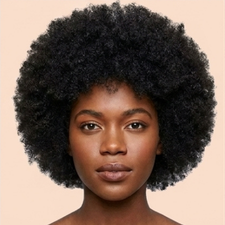
If a barcode is not in the catalogue yet, scanning the ingredient list still works, and that product gets added for everyone who scans it after you. The catalogue has grown that way, one member's scan at a time, which is why it covers the brands aimed at textured hair rather than only the mainstream ones.
saved you $22 🫶🏾

the part the label cannot tell you
An ingredient list predicts how a product should behave. It cannot tell you how it behaved on hair like yours over a month, whether it flaked under a gel, or whether it was worth the price.
That is what the Circle adds: 10,000+ Black women with 4C, 4B, 4A, 3C, 3B and 3A hair who have already tried most of the shelf. Between the scan and the women who used it, you get both halves of the answer.
it is mainly about not wasting money
Most people with textured hair have a graveyard of half-used bottles that cost real money. Every one of those was bought on a claim on the front of the pack. Checking the back before you buy, against your own hair rather than a generic rule, is the cheapest change you can make to a hair routine.
is Shea free?
Yes. Shea is free on iPhone and Android, and scanning is included on the free tier with a monthly limit. Premium raises that limit and is optional. There are no ads and your data is not sold.
Related: the hair porosity app, which is what the scores are measured against, plus the type 4 hair app and the hair growth tracker.
frequently asked